Workers' compensation is designed to help workers obtain immediate relief when they’re injured on the job, regardless of the cause. But if you're a construction worker in Philadelphia receiving partial wages while recovering from a serious injury, you already know that workers' comp falls short.
Unfortunately, many workers assume that workers’ comp is their only option. In many cases, however, there are other ways to secure the money you need.
With ongoing residential and commercial development across Philadelphia, construction sites often involve multiple contractors working side by side, which increases the risk that negligence by one company injures workers employed by another.
Third-party liability for construction accidents in Philadelphia opens the door to additional compensation from contractors, property owners, and other parties beyond your employer.
If you were injured on the job, call Hill & Associates for a free consultation with our Philadelphia construction accident attorney. We can review your case and determine whether you may be eligible to pursue additional compensation with a third-party claim.
SCHEDULE A FREE CONSULTATION TODAY
Key Takeaway: Suing Someone Other Than Your Employer After a Construction Accident
- Pennsylvania law allows injured construction workers to file third-party lawsuits against anyone other than their employer whose negligence caused the accident.
- Common third-party defendants include general contractors, subcontractors, property owners, equipment manufacturers, and architects or engineers.
- Third-party claims can recover damages that workers' comp doesn't cover, including full lost wages, pain and suffering, and future earning capacity.
- You can pursue a third-party lawsuit while still receiving workers' compensation benefits.
- Pennsylvania's two-year statute of limitations applies, so taking legal action quickly is essential.
Third-Party Lawsuit vs Workers' Comp in PA: What's the Difference?
Many injured construction workers think workers’ compensation is the end of the road. They file a claim, get compensation for their medical bills, receive partial wages, and assume that’s it. But a third-party lawsuit and workers' comp in Pennsylvania present two very different paths, and you may be able to pursue both at the same time.
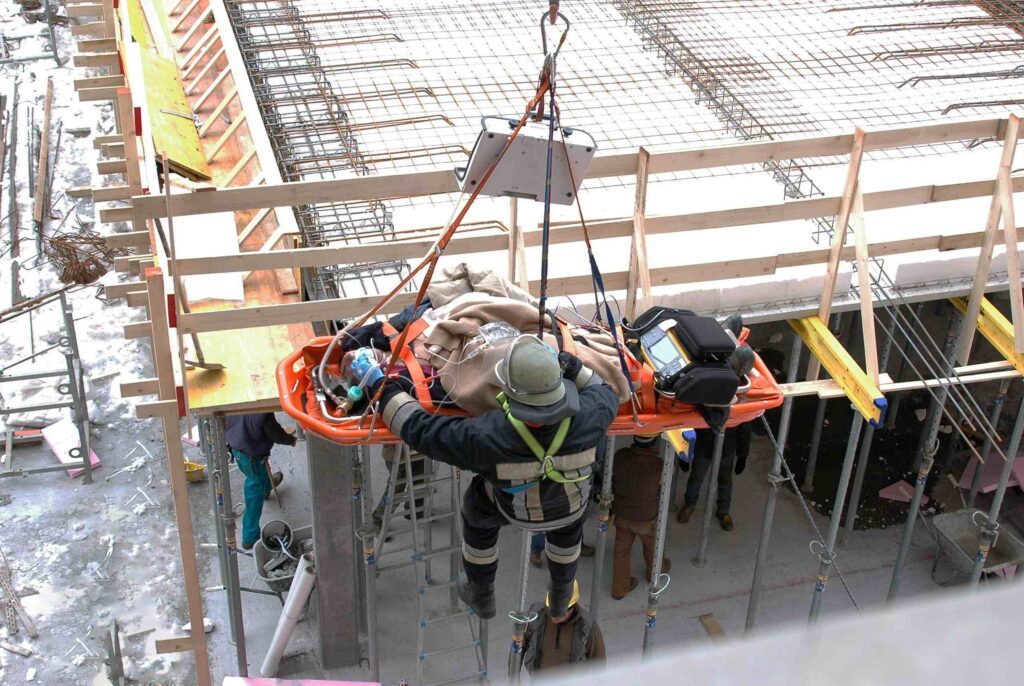
What Does Workers' Comp Cover?
Workers’ compensation is a no-fault system. You don’t have to prove anyone was negligent. In exchange, you give up the right to sue your employer. Benefits include medical treatment and about two-thirds of your average weekly wage. That helps, but it doesn’t cover everything.
Workers’ comp does not pay for pain and suffering. It doesn’t cover your full lost wages. It also doesn’t compensate you for how injuries affect your quality of life or relationships. Together, these damages are usually substantial.
What Does a Third-Party Lawsuit Cover?
A third-party claim works like any other personal injury lawsuit. You sue the party whose negligence caused your injury. If you win, you can recover full compensation. That includes all your medical expenses, 100% of lost income, pain and suffering, and compensation for permanent disability.
The trade-off is that you have to prove fault. Someone other than your employer had to do something wrong, and that negligence had to cause your accident. That’s where identifying the companies responsible for safety on a Philadelphia construction site becomes critical.
When Can a General Contractor Be Held Liable for a Construction Accident?
A general contractor’s responsibility on the jobsite is one of the most common bases for third-party construction accident claims. The general contractor typically oversees the project, coordinates the various trades, and bears primary responsibility for site safety.
On many Philadelphia construction projects, especially large commercial builds and high-rise developments, multiple subcontractors work on the site at the same time. The general contractor is often responsible for coordinating safety across those crews.
Under Pennsylvania law, general contractors can be liable when they:
- Fail to maintain safe working conditions in areas of the site they control
- Ignore known hazards or fail to correct dangerous conditions
- Provide defective equipment or unsafe materials
- Fail to coordinate safety measures between different subcontractors
- Violate Occupational Safety and Health Administration (OSHA) safety regulations that they're responsible for enforcing
OSHA sets detailed safety standards for construction sites. When a general contractor violates these standards and a worker gets hurt, that violation can serve as powerful evidence of negligence.
For example, OSHA fall protection rules under 29 CFR 1926.451(g) require guardrails or fall protection systems on scaffolding above certain heights. If a general contractor removes guardrails to speed up work and a worker falls, that OSHA violation makes it much easier to prove the contractor was negligent.
Subcontractor Liability in Pennsylvania Construction Accidents
Subcontractor liability arises when one trade’s negligence injures a worker from a different company. Construction sites bring together electricians, plumbers, ironworkers, carpenters, and many other trades. When one sub creates a hazard that injures another company’s employee, that subcontractor can be sued.
Say an electrical subcontractor leaves exposed wiring where other workers are present. A carpenter nearby gets electrocuted. The carpenter can’t sue his own employer, but he can sue the electrical sub whose negligence caused the injury.
Subcontractors can be liable when they:
- Create dangerous conditions in common areas or shared workspaces
- Fail to warn other workers about hazards they've created
- Operate equipment carelessly near other workers
- Leave debris, tools, or materials in walkways
- Damage safety equipment or remove safety barriers
Philadelphia construction sites often have dozens of subcontractors working at once. Identifying which one caused your accident requires reviewing site safety logs, OSHA reports, contractor records, witness statements, and other evidence to determine who created the dangerous condition.
Property Owner Liability for Construction Injuries in Pennsylvania
A property owner’s liability for construction injuries depends on how much control the owner has over the site. Owners who hire contractors and step back typically aren’t liable. But owners who stay actively involved may share responsibility for accidents.
Property owners can be liable when they:
- Retain control over safety procedures or specific aspects of the work
- Know about dangerous conditions on the property and fail to warn contractors
- Hire contractors they know or should know are incompetent or unsafe
- Create hazards that injure construction workers
- Fail to maintain safe premises in areas they still control
In Philadelphia, property owners include homeowners, commercial landlords, developers, the City itself, hospitals, and universities. Each has different levels of involvement in construction projects, which affects their potential liability.
Can Equipment Manufacturers Be Liable for Construction Accidents?
Construction work relies on heavy machinery, power tools, scaffolding, and safety harnesses. When equipment fails due to a defect, the manufacturer can be held liable under Pennsylvania’s product liability laws.
Product liability claims don’t require proving negligence. Under strict liability, a manufacturer is responsible for injuries caused by defective products regardless of how careful they were. The question is whether the product was unreasonably dangerous.
Equipment-related claims might involve:
- Scaffolding that collapses due to defective components
- Power tools that malfunction and cause injuries
- Safety harnesses or fall protection gear that fails
- Cranes, forklifts, or other heavy equipment with mechanical defects
- Ladders that break under normal use
Equipment rental companies may also be liable if they rented out equipment they knew was defective or failed to properly maintain equipment in their fleet.
Other Parties Who May Be Responsible for Construction Site Injuries
Beyond the major players, several other parties can share liability for construction accidents depending on the circumstances:
Architects and Engineers
Design professionals can be liable if their plans contain errors that create dangerous conditions. An architect who designs a structure that can’t be built safely, or an engineer who miscalculates load-bearing requirements, may share responsibility for resulting accidents.
Construction Managers
On large projects, construction managers oversee scheduling, coordination, and safety compliance. If they have authority over how work is performed and fail to maintain safe conditions, they can be sued.
Scaffolding and Equipment Companies
Companies that erect scaffolding or install temporary structures are responsible for doing that work correctly. If scaffolding collapses because it was improperly assembled, the company that built it may be liable.
Delivery Drivers and Outside Vendors
People who enter the site to make deliveries or provide services can cause accidents through negligence. A delivery driver who backs into a worker, or a vendor who drops materials unsafely, can be held responsible.
How Do You Prove Negligence in a Philadelphia Construction Accident Claim?
Winning a third-party construction accident claim requires proving that someone other than your employer was negligent and that their negligence caused your injuries. This involves gathering evidence, identifying witnesses, and often working with safety experts.
Key evidence in construction accident cases includes:
- OSHA records and citations: If OSHA investigated the accident and issued citations, those findings can support your claim. OSHA's construction safety standards establish the minimum safety requirements for construction sites.
- Site photographs and videos: Images taken shortly after the accident can document hazardous conditions before they're fixed or cleaned up.
- Witness statements: Co-workers who saw what happened, or who knew about dangerous conditions, can provide crucial testimony.
- Safety logs and inspection records: Construction sites are supposed to maintain daily safety logs. These records can show whether hazards were reported and ignored.
- Expert testimony: Construction safety experts can explain how the accident happened, what safety measures should have been in place, and whose responsibility it was to implement them.
An attorney can subpoena documents, depose witnesses, and work with experts to build the strongest possible case. The investigation often reveals multiple parties who share fault.
What Damages Can You Recover in a Third-Party Construction Accident Case?
Third-party claims allow construction workers to recover compensation beyond what workers' comp provides. Available damages include:
- Full lost wages: Workers' comp pays roughly two-thirds of your average wage. A third-party claim can recover 100% of lost income, including overtime you would have earned.
- Future earning capacity: If your injuries prevent you from returning to construction work or limit your ability to earn what you made before, you can recover compensation for that lost future income.
- Pain and suffering: Workers' comp doesn't pay for physical pain or emotional distress. A third-party claim does.
- Loss of enjoyment of life: If your injuries prevent you from doing things you used to enjoy, that loss has value.
- Disfigurement and permanent disability: Serious injuries that leave lasting effects deserve compensation that reflects their true impact on your life.
Note that if you receive both workers' comp benefits and a third-party settlement, your workers' comp carrier may have a lien on part of your recovery. An attorney can help structure the settlement to minimize this impact.
How Long Do You Have to File a Construction Accident Lawsuit in Pennsylvania?
Pennsylvania’s statute of limitations allows you two years from the date of injury to file a personal injury lawsuit. This deadline applies to third-party construction claims. If you miss the deadline, you lose the right to sue, no matter how strong your case is.
Two years might sound like a long time, but construction accident cases take time to investigate. Identifying responsible parties, gathering evidence, and working with experts can take many months. The sooner you talk to an attorney, the better your chances of preserving critical evidence.
FAQs About Third-Party Construction Accident Claims in Philadelphia
Will filing a third-party lawsuit affect my workers' comp benefits?
No. You can receive workers’ compensation and pursue a third-party lawsuit at the same time. They’re separate legal processes. However, if you win a settlement, your workers’ comp carrier may seek reimbursement for benefits they paid.
What if my own negligence partly caused the accident?
Pennsylvania follows modified comparative negligence rules. You can recover damages as long as your fault was less than 51%. Your compensation gets reduced by your percentage of fault. If you were 20% responsible, you’d receive 80% of total damages.
What if multiple parties caused my accident?
You can sue multiple defendants in the same lawsuit. This is common in construction accidents, where a general contractor, subcontractor, and equipment manufacturer might all share fault. Each pays their proportionate share.
What if the company responsible has no insurance?
An attorney can investigate the defendant’s assets and insurance coverage before you invest time in a lawsuit. Other parties in the chain may have deeper pockets. If a subcontractor has minimal coverage, the general contractor or property owner may have more substantial insurance.
What should I do immediately after a construction accident?
Report the accident to your supervisor and make sure it’s documented. Seek medical attention right away. Take photos of the scene and any hazards. Get contact information from witnesses. Then talk to an attorney before giving recorded statements to insurance companies.
How much does it cost to hire Hill & Associates for a construction accident case?
Hill & Associates handles construction accident cases on a contingency fee basis. You pay nothing up front, and we only get paid if we recover compensation for you. Your initial consultation is free and confidential.
Injured on a Philadelphia Construction Site? Find Out Who Else May Be Responsible.
Workers' compensation exists for a reason, but it wasn't designed to make you whole after a serious construction accident. If someone other than your employer caused your injuries, you may have options you haven't considered.
At Hill & Associates, we’ve helped Philadelphia construction workers identify every party responsible for their accidents and fight for full compensation. If you’re struggling while recovering from a construction injury, we’re ready to look at your case and give you honest answers. Contact us today for a free consultation.