Every year, scaffolding accidents kill dozens of construction workers and injure thousands more in the U.S. Falls and scaffolding failures consistently rank as a leading cause of construction accident injuries, prompting federal regulators to develop some of the nation’s toughest scaffold safety regulations.
When a scaffold collapses or fall protection fails, the injuries are often severe or catastrophic: broken bones, spinal cord damage, traumatic brain injuries, or worse.
If you're searching for a Philadelphia scaffolding accident lawyer, you likely already know that workers' compensation alone won't cover everything you've suffered and lost.
A construction accident attorney can investigate whether safety violations or negligence caused your fall. When someone other than your employer is responsible, you may have a third-party claim worth pursuing.
SCHEDULE A FREE CONSULTATION TODAY
What Makes Scaffolding Accidents Different From Other Construction Injuries?
- Scaffolding and fall protection failures often involve multiple responsible parties, including general contractors, subcontractors, equipment manufacturers, and property owners.
- OSHA has specific scaffolding standards (29 CFR 1926.451) that contractors must follow. Violations can serve as strong evidence of negligence.
- In Pennsylvania and nationwide, about 72% of scaffold accidents are attributed to planking or support giving way, slipping, or being struck by falling objects, according to the Occupational Safety and Health Administration.
- Third-party claims allow injured workers to recover damages beyond workers' comp, including pain and suffering and full lost wages.
- Proving negligence requires documenting the failure through photos, witness statements, safety logs, and OSHA citations.
What Causes Scaffolding Accidents on Construction Sites?
Most scaffolding accidents result from improper assembly, missing guardrails, overloaded platforms, or defective equipment. When contractors ignore OSHA requirements, workers pay the price.
Scaffolding failures don't happen randomly. They follow predictable patterns that safety inspectors and attorneys recognize:
Improper Assembly and Installation
Scaffolding must be erected by qualified workers following the manufacturer's specifications. When crews rush assembly or skip steps, the structure becomes unstable. Missing bracing, unlocked wheels, or improper base plates can cause collapse.
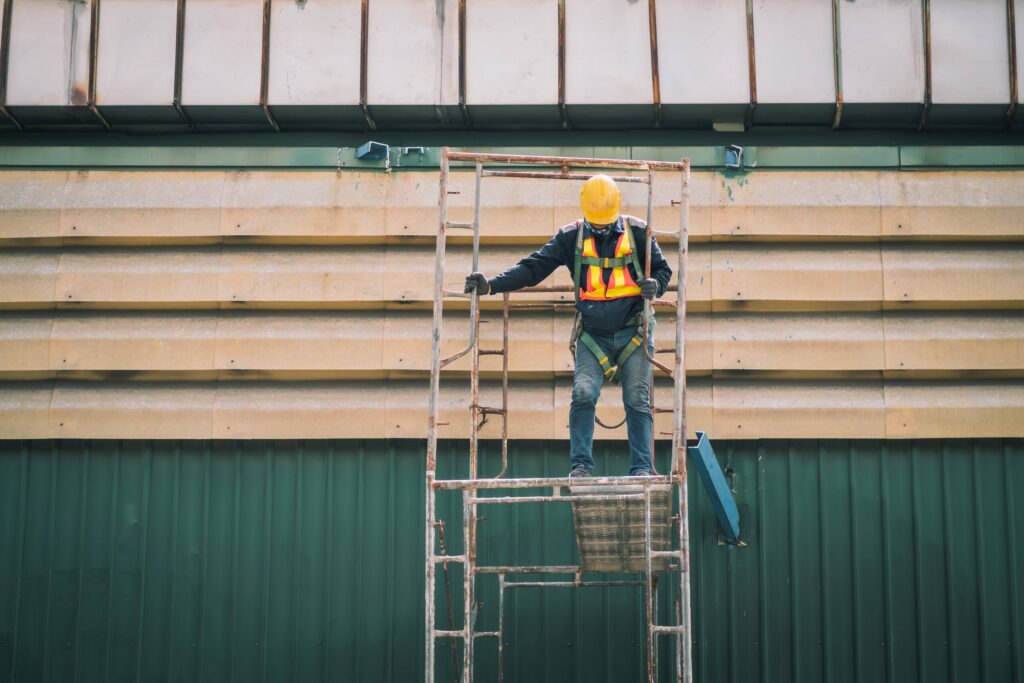
Missing or Inadequate Guardrails
OSHA requires guardrails on scaffolds more than 10 feet above a lower level. The OSHA scaffolding standard (29 CFR 1926.451) specifies exact height and strength requirements. Missing or damaged guardrails are among the most common OSHA citations.
Overloaded Platforms
Every scaffold has a maximum load capacity. When workers stack too many materials or too many people crowd onto a platform, the structure can buckle. Load limits should be posted and enforced.
Defective Components
Scaffolding equipment wears out. Cracked planks, corroded frames, and worn connectors all create hazards. Equipment should be inspected before each use and replaced when damaged.
What OSHA Rules Apply to Fall Protection in Construction?
The OSHA fall protection standard (29 CFR 1926.501) requires employers to protect workers from falls of six feet or more in construction. This protection can include guardrails, safety nets, or personal fall arrest systems like harnesses.
When a construction injury results from fall protection violations, those violations become powerful evidence. OSHA citations document exactly what went wrong and who was responsible for fixing it.
Key OSHA fall protection requirements include:
- Guardrails with a top rail 42 inches high (plus or minus 3 inches)
- Mid-rails installed halfway between the top rail and the platform
- Toeboards at least 3.5 inches high to prevent tools and materials from falling
- Personal fall arrest systems inspected before each use
- Competent person on site to inspect scaffolding daily
When employers skip these requirements, liability for safety harness failures or other fall protection defects shifts to whoever was responsible for compliance.
OSHA reports that about 4,500 injuries and 60 fatalities occur annually from scaffolding accidents. Fall protection violations are among the most frequently cited safety failures in construction.
OSHA’s scaffold safety regulations aren’t obscure rules that contractors might not know about. They’re fundamental safety requirements that every construction company should follow. When an employer ignores them and a worker falls, that employer must be held accountable.
OSHA also requires that workers receive training on fall hazards and how to use fall protection equipment. Employers who put workers on scaffolding without proper training may face additional liability.
How Do You Prove Negligence in a Pennsylvania Scaffolding Accident?
Proving negligence requires showing that someone had a duty to keep you safe, they breached (or failed) that duty, and their breach caused your injuries. In scaffolding cases, this often means documenting safety violations.
Evidence from a construction fall investigation typically includes:
Photographs and Videos
Photos taken immediately after the accident can document missing guardrails, defective equipment, or unsafe conditions. If you can safely take photos before leaving the scene, do so. Co-workers may also have images or video.
OSHA Records and Citations
If OSHA investigated the accident, its findings are valuable evidence. OSHA citations identify specific violations and the employer that was responsible. An attorney can request these records.
Daily Safety Logs
Construction sites should maintain daily inspection logs. These records show whether hazards were reported, who was notified, and what action was taken. Missing or incomplete logs can also support your case.
Witness Statements
Co-workers who saw the accident or knew about unsafe conditions can provide testimony. Their statements should be collected quickly, before memories fade or workers move to other jobs.
Expert Analysis
Engineers and safety experts can analyze the scaffolding failure, review OSHA standards, and explain what should have been done differently. Their testimony helps establish that the defendant violated safety requirements.
Who Can Be Held Liable for a Scaffolding Accident in Pennsylvania?
Workers’ compensation covers injuries regardless of who caused the accident, but it limits what you can recover. It pays your medical bills and about two-thirds of your wages, but not for pain and suffering, full lost income, and other damages.
A third-party lawsuit lets you pursue full damages from anyone other than your direct employer who contributed to the accident.
Potentially liable parties include:
- General contractors: Often responsible for overall site safety and coordinating subcontractors
- Subcontractors: Liable if their negligence created the hazard or they failed to maintain equipment
- Property owners: May share liability if they retained control over safety or knew of hazards
- Equipment manufacturers: Responsible if defective scaffolding or safety gear caused the accident
- Scaffolding companies: Liable for improper assembly or failure to maintain rented equipment
In Philadelphia, large commercial construction projects often involve multiple contractors working side by side. High-rise projects in Center City, hospital renovations, university construction, and residential developments all present scaffolding hazards.
Sorting out who bears responsibility requires investigating contracts, safety responsibilities, and the chain of events leading to the accident. An attorney can subpoena documents and depose witnesses to identify every liable party.
What Are the Most Common Injuries From Scaffolding Falls?
Falls from scaffolding often result in catastrophic injuries. The height of the fall, the surface below, and whether any safety equipment partially worked all affect the outcome. Common injuries include:
- Traumatic brain injuries: Even with a hard hat, a fall can cause serious head trauma that affects memory, cognition, and personality
- Spinal cord injuries: Falls can damage the spine, potentially causing partial or complete paralysis
- Multiple fractures: Broken legs, arms, pelvis, and ribs are common, often requiring surgery and months of recovery
- Internal organ damage: The impact can rupture organs or cause internal bleeding that requires emergency surgery
- Crush injuries: When scaffolding collapses, workers may be trapped under heavy equipment and debris
These injuries often require extensive medical treatment, multiple surgeries, and long-term rehabilitation. Many workers never return to construction, and some face permanent disability. The financial impact extends far beyond what workers’ compensation covers.
How Do PA Ladder and Scaffold Injury Claims Work?
PA ladder and scaffold injury claims follow Pennsylvania personal injury law. You must prove that the defendant owed you a duty of care, breached that duty through negligence, and caused your injuries as a result.
Pennsylvania uses modified comparative negligence. You can recover damages as long as you were less than 51% at fault. Your compensation gets reduced by your share of responsibility.
The Pennsylvania statute of limitations (42 Pa.C.S. § 5524) gives you two years from the date of injury to file a lawsuit. Missing this deadline means losing your right to sue.
What Damages Can You Recover in a Scaffolding Accident Lawsuit?
Third-party claims allow you to recover compensation that workers' comp doesn't provide. Available damages include:
- Full lost wages: 100% of income lost, not the two-thirds that workers' comp pays
- Future earning capacity: Compensation if injuries prevent you from returning to construction work
- Pain and suffering: Payment for physical pain and emotional distress
- Medical expenses: All treatment costs, including future surgeries and rehabilitation
- Loss of enjoyment: Compensation for activities you can no longer enjoy and a diminished quality of life
If you receive both workers' comp and a third-party settlement, your workers' comp carrier may seek reimbursement. The Pennsylvania Bureau of Workers' Compensation has specific rules about how these liens work.

What Should You Do After a Scaffolding Accident in Pennsylvania?
If you’ve been injured in a scaffolding accident, the steps you take in the days and weeks after can affect your ability to recover compensation. Once you’ve received medical care, consider the following:
- Talk to a construction accident attorney: Before giving statements to insurance adjusters or signing any documents, consult with a lawyer who handles scaffolding cases
- Keep all medical appointments: Follow your treatment plan and attend every appointment. Gaps in treatment can hurt your claim.
- Document your recovery: Keep a journal or video diary noting your pain levels, limitations, and how the injury affects daily life
- Preserve evidence: If you have photos, keep them safe. Write down the names of witnesses while your memory is fresh.
- File for workers’ comp: Report your injury and file a claim. Workers’ comp provides immediate benefits while a third-party lawsuit proceeds.
Taking these steps protects your rights and helps build a stronger case if you pursue a third-party claim.
FAQs About Scaffolding Accident Claims in Pennsylvania
Can I sue if I was partly at fault for the accident?
Yes. Pennsylvania allows recovery as long as you were less than 51% responsible. Your damages get reduced by your percentage of fault. If you were 20% at fault, you'd receive 80% of the total damages. This rule underscores the importance of working with an experienced personal injury lawyer who will fight to protect the value of your third-party claim.
What if OSHA didn't investigate my accident?
OSHA doesn’t have the means to investigate every accident. Your scaffolding accident lawyer can still build a strong case using photos, witness statements, safety logs, and expert testimony. They can also hire safety engineers to analyze what went wrong.
How long do scaffolding accident lawsuits take in Pennsylvania?
Cases can take several months to settle or longer if they require a trial. Every scaffolding accident case depends on a number of factors, each of which affects the timeline. Complex cases involving multiple defendants generally take longer.
Will filing a lawsuit affect my workers' comp benefits?
No. You can receive workers' compensation while pursuing a third-party lawsuit. The two are separate processes. If you win a third-party settlement, your workers' comp carrier may be entitled to partial reimbursement.
What should I do after a scaffolding accident?
Report the accident and get medical attention first. Because the preservation of evidence is key, hire a lawyer as soon as possible. They can immediately start securing crucial evidence before it disappears and handle communications with the insurance companies to protect your rights and the value of your claim.
How much does it cost to hire a lawyer for a scaffolding accident case?
Hill & Associates handles scaffolding accident cases on a contingency fee basis. You pay nothing up front, and we only get paid if we recover compensation for you. Your initial consultation is free. This approach allows anyone to access excellent legal representation regardless of their financial circumstances.
Injured in a Scaffolding Accident? Call For a Free Consultation Today.
A scaffolding collapse or fall protection failure can change your life in seconds. The physical pain, the financial pressure, and the uncertainty about your future can weigh heavily and make it difficult to know where to turn. If someone else’s negligence caused your injuries, you may have options beyond workers’ compensation.
At Hill & Associates, we investigate scaffolding accidents to identify every responsible party and build the strongest possible case. We work with safety engineers, review OSHA records, and gather the evidence needed to prove negligence. We’ve helped Philadelphia construction workers recover compensation for serious injuries, and we’re ready to look at your situation, too. Contact us today for a free consultation.