Road hazards are a serious threat to motorcyclists, who have far less protection than drivers in enclosed vehicles. Different hazards can all cause a rider to lose control in seconds. When a motorcycle accident is triggered by a dangerous road condition rather than another driver’s actions, injured riders are often left wondering who may be responsible and what legal options exist.
At Hill & Associates, we can help you determine liability in these cases. A motorcycle accident lawyer can look at how the hazard developed to determine who caused it. They will explain to you how the law treats road hazard–related injury accidents and evaluate whether a compensation claim may be available.
SCHEDULE A FREE CONSULTATION TODAY
Key Takeaways: A Road Hazard Caused My Motorcycle Accident, What Next?
- Road hazards pose a heightened risk to motorcyclists because even minor defects can disrupt balance, traction, or steering, leading to sudden loss of control.
- Common hazards include potholes, loose gravel, roadway debris, construction defects, and poor drainage.
- Liability in road hazard accidents depends on identifying who was responsible for maintaining the roadway and whether that party failed to address or warn of a known danger.
- Proving notice of the hazard, either actual or constructive, is a central part of establishing fault in these cases.
- Government entities and private contractors may both be held responsible, depending on who controlled or maintained the roadway at the time of the incident.
- Pennsylvania law allows claims against public agencies for dangerous roadway conditions, but these cases must meet specific statutory requirements and deadlines.
- Evidence such as maintenance records, crash reconstruction analysis, photographs, and medical documentation plays a decisive role in linking the hazard to the accident.
- Comparative fault arguments are common, but motorcyclists are not required to anticipate concealed or unreasonably dangerous road defects.
- Enlist the help of your motorcycle accident attorney early to identify responsible parties, secure evidence, and pursue appropriate compensation.
Types of Road Hazards That Commonly Cause Motorcycle Accidents
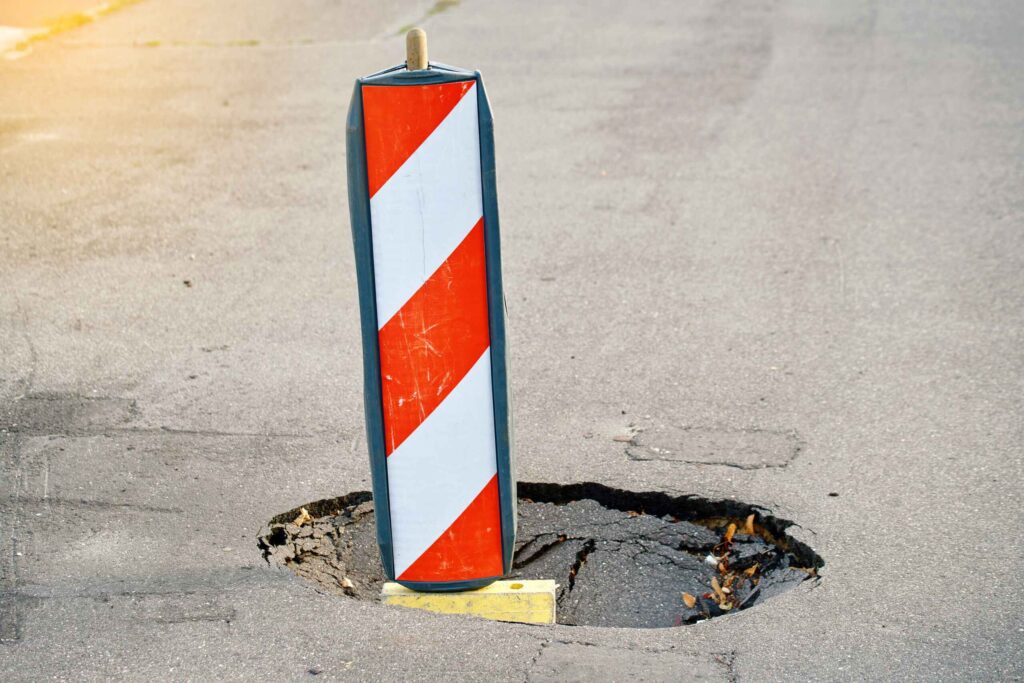
Motorcycles respond far more aggressively to roadway conditions than passenger vehicles, making hazards that might be manageable for cars extremely dangerous for riders. Even minor defects or debris can disrupt balance, traction, or steering, leading to a sudden loss of control. Below are several roadway hazards that contribute to motorcycle crashes:
Potholes and Uneven Pavement
Potholes, sunken asphalt, and abrupt changes in road elevation can cause a motorcycle’s front wheel to dip or strike at an angle, throwing the rider off balance. Unlike cars, motorcycles cannot absorb these impacts without destabilization, particularly at higher speeds. Riders may be ejected from the bike or forced into oncoming traffic while attempting to regain control.
Loose Gravel, Sand, or Dirt
Loose materials on the roadway significantly reduce tire traction, especially during braking or turning. Construction zones, poorly maintained shoulders, and unpaved intersections are common sources of gravel or sand. When a motorcycle tire slips on loose debris, riders may experience immediate skidding or a low-side crash with little opportunity to recover.
Roadway Debris
Debris such as fallen cargo, tree branches, tire fragments, or metal objects can create sudden obstacles in a rider’s path. Swerving to avoid debris may cause a collision with another vehicle or fixed object, while striking the debris directly can puncture tires or destabilize the bike. These hazards are especially dangerous at night or in heavy traffic when visibility and reaction time are reduced.
Construction Zones and Poorly Marked Repairs
Construction areas often involve uneven surfaces, temporary steel plates, milled pavement, or lane shifts. When warning signs are missing, unclear, or placed too late, riders may encounter abrupt surface changes without adequate time to adjust. Fresh asphalt seams, raised plates, or unfinished repairs can interfere with steering and braking, increasing the likelihood of a crash.
Defective Drainage Grates and Manhole Covers
Improperly installed or poorly maintained drainage grates and manhole covers can create slick or uneven surfaces. When these fixtures are misaligned or placed parallel to traffic flow, motorcycle tires may slip or become momentarily trapped. This is particularly dangerous during rain, when metal surfaces become even more slippery.
Standing Water and Poor Drainage
Pooled water can conceal potholes or debris and reduce tire traction. Hydroplaning, while more common in cars, can still occur with motorcycles under certain conditions. In such situations, riders may lose visibility and control simultaneously, making it difficult to identify hazards until it is too late.
Faded Lane Markings and Missing Signage
Worn pavement markings, missing warning signs, or obscured traffic control devices can leave riders unprepared for sharp curves, lane merges, or changes in road layout. Motorcyclists rely heavily on visual cues to anticipate road conditions, and inadequate signage can prevent timely speed or positioning adjustments.
Determining Liability for Road Hazard Motorcycle Accidents
When a road hazard contributes to a motorcycle crash rather than a collision with another driver, liability analysis becomes more challenging. These motorcycle accidents cases require identifying who had legal responsibility for the roadway condition, whether that party failed to act reasonably, and how that failure directly led to the crash. Unlike typical traffic accidents, road hazard claims involve multiple responsible parties, each governed by different legal standards. Liability is determined based on the following:
Duty to Maintain Safe Roadways
Liability begins with establishing who owed a duty to keep the roadway reasonably safe. In Pennsylvania, this responsibility may fall on a city, county, state transportation agency, or a private contractor hired to perform roadwork or maintenance. Government entities are generally expected to inspect roadways, address known hazards within a reasonable time, and provide adequate warnings when repairs cannot be made immediately. Private contractors may assume part of this duty when they control a construction zone or perform surface repairs.
Notice of the Hazard
A central issue in road-hazard cases is whether the responsible party knew, or should have known, of the dangerous condition. Actual notice exists when a hazard has been reported through complaints, prior accidents, or internal inspections. Constructive notice may be established when the condition existed long enough that it should have been discovered through reasonable maintenance practices. Evidence such as maintenance logs, citizen reports, or prior repair requests can help demonstrate that the hazard was not sudden or unavoidable.
Failure to Repair or Warn
Once notice is established, the next question is whether the responsible party failed to act within a reasonable timeframe. Liability may arise when repairs were delayed without justification or when no warning signs, cones, or markings were placed to alert riders. For motorcyclists, even short-term hazards may require immediate warnings due to heightened vulnerability. Inadequate or poorly placed warnings can be just as significant as a failure to repair the hazard itself.
Causation and Crash Reconstruction
It must be shown that the road hazard directly caused the motorcycle accident, rather than rider error or unrelated factors. It often involves accident reconstruction, scene measurements, photographs, and vehicle inspections. Skid marks, debris patterns, damage to the motorcycle, and medical injury profiles may support the conclusion that the hazard triggered the loss of control. Establishing this causal link is especially important when government entities attempt to argue that rider behavior was the primary cause.
Comparative Fault Considerations
Pennsylvania is a modified comparative negligence system state, meaning liability may be reduced if the rider is found partially at fault. Defendants may argue that the rider was speeding, inattentive, or failed to avoid a visible hazard. For obvious or reasonably foreseeable hazards, a motorcyclist may be found partially or fully negligent for failing to avoid them if they were not driving attentively or at a safe speed.
However, when it comes to concealed, sudden, or unreasonably dangerous defects, a motorcyclist is not expected to anticipate these. A careful analysis of road design, visibility, lighting, and signage is necessary to determine whether the rider’s conduct was reasonable under the circumstances.
Government Immunity and Exceptions
Claims against government entities attract what is known as sovereign immunity, which limits when public agencies can be sued. However, Pennsylvania law recognizes exceptions for dangerous roadway conditions, including potholes, surface defects, and improperly maintained infrastructure. Successfully pursuing a claim requires fitting the facts into one of these statutory exceptions and complying with the specific notice and filing deadlines. Failure to meet procedural requirements can bar recovery regardless of fault.
Multiple Responsible Parties
In some cases, more than one party may share responsibility for the hazard. For example, a city may own the roadway, while a private contractor performed defective repairs or left debris behind. Identifying all potentially liable parties allows for a more complete assessment of fault and may expand the available sources of compensation. It requires a detailed investigation into contracts, maintenance records, and control over the accident location at the time of the crash.
Taking Action After a Motorcycle Collision
The steps you take after a motorcycle crash caused by a road hazard can directly affect your ability to establish fault and pursue compensation. Because roadway conditions can change quickly, preserving evidence and maintaining consistent documentation becomes especially important in these cases. Acting methodically helps protect your legal position and prevents key details from being lost.
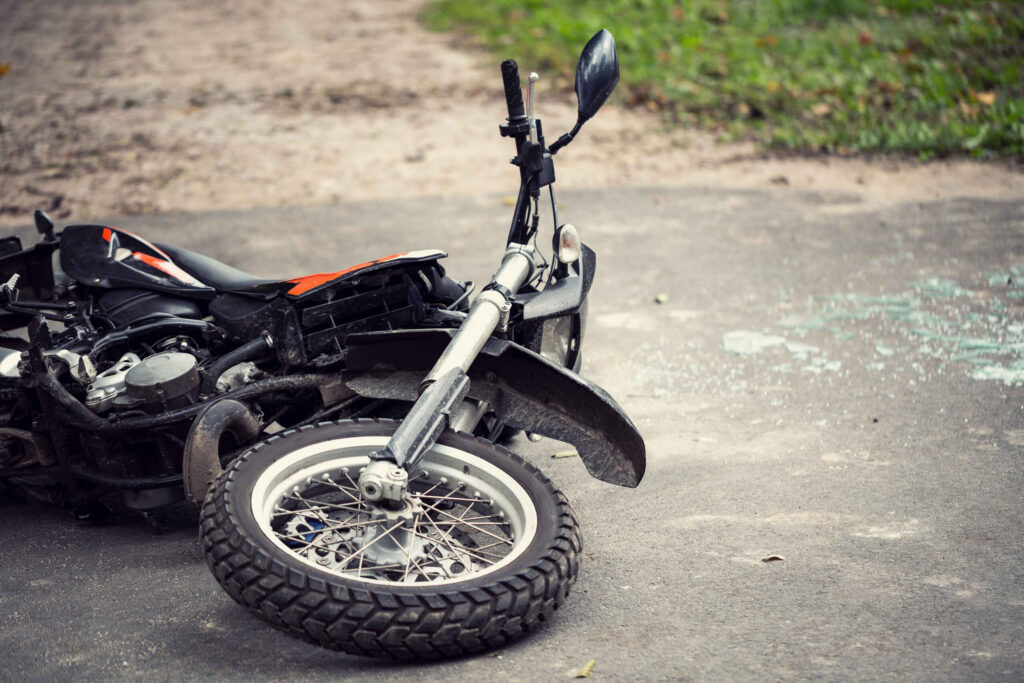
- Continue all prescribed medical treatment: Follow your doctor’s treatment plan closely and attend every appointment. Insurers frequently use gaps in care to question the seriousness of injuries or argue that they were unrelated to the crash.
- Obtain and preserve the police report: Request a copy of the crash report as soon as it is available. This document establishes the time, location, and circumstances of the accident, which can later be compared to maintenance records or prior hazard complaints.
- Keep all medical records organized: Retain emergency room records, diagnostic results, physician notes, and follow-up treatment documentation. These records provide objective proof linking your injuries to the road condition that caused the collision.
- Preserve your motorcycle and riding gear: Do not repair or discard your motorcycle helmet, motorcycle itself, or protective clothing. Physical evidence such as skid marks, impact damage, and wear patterns can help experts reconstruct how the crash occurred.
- Avoid altering the accident scene evidence: Refrain from modifying or cleaning the bike or equipment before it is examined. Even minor alterations can compromise the ability to determine how the hazard contributed to the accident.
- Consult a motorcycle accident attorney promptly: Road-hazard cases often involve government or property-liability issues that require prompt investigation. Early legal involvement helps ensure that you preserve evidence and meet deadlines. The legal team at Hill & Associates will also engage accident reconstruction specialists to evaluate the roadway condition and explain the mechanics of the crash.
A Pennsylvania Motorcycle Accident Attorney Can Help
Recognizing the proper steps to take after a motorcycle crash caused by a road hazard is the first key step toward protecting your rights and your recovery. Therefore, you do not want to downplay damaged road conditions, missing warnings, or delayed maintenance that may have contributed to your crash.
If a roadway defect left you injured, speak with a motorcycle accident attorney at Hill & Associates to help clarify who may be responsible and what options are available to pursue compensation.
Call your attorney today to evaluate your case and determine the appropriate steps to strengthen your legal position and hold the responsible parties accountable.
Frequently Asked Questions About What Happens When Road Hazards Cause Motorcycle Accidents
Can road hazard claims still succeed if no prior complaints were filed?
Yes, prior complaints are helpful but not required if evidence shows the hazard existed long enough that routine inspections should have identified it. Maintenance schedules, inspection logs, and expert analysis can establish constructive notice even when no formal reports were made before the crash.
Do motorcycle riders face a higher burden of proof in road hazard cases?
Motorcyclists do not face a higher legal burden, but insurers frequently attempt to shift blame by arguing that rider instability or speed caused the accident. Strong evidence showing the roadway defect, its duration, and how it directly caused the crash helps counter these arguments and reinforces that the hazard, not rider behavior, led to the collision.
Can a road hazard claim proceed if the hazard was “open and obvious”?
A claim may still proceed if the hazard posed an unreasonable danger despite being visible or if avoiding it was impractical for a motorcyclist. Courts and insurers evaluate various factors such as traffic conditions, lighting, road curvature, and the sudden nature of the defect to determine whether avoidance was realistically possible.
How long do road hazard motorcycle injury claims typically take to resolve?
These claims often take longer than standard vehicle accident cases because they involve technical evidence, expert analysis, and complex liability rules. Investigations into maintenance history, notice, and responsible parties can extend timelines, particularly when government entities are involved.